

LG and Samsung are two of the biggest names in home appliances, but which is better for you? Here’s a quick breakdown to help you decide:
- LG excels in durability, energy efficiency, and quiet operation. Its appliances, like refrigerations and washing machines, are reliable and built for long-term use. LG also offers strong customer support with factory-trained technicians.
- Samsung stands out with advanced smart features and stylish designs. Its appliances integrate seamlessly with smart home systems, offering innovative features like Family Hub screens and AddWash technology. Samsung is also known for budget-friendly options.
Quick Comparison
| Category | LG | Samsung |
|---|---|---|
| Performance | Efficient cooling, TurboWash cleaning | Smart features, faster cycles |
| Design | Minimalist, space-saving | Customizable, modern finishes |
| Durability | Reliable, lower maintenance costs | Some software reliability concerns |
| Smart Features | SmartThinQ integration | SmartThings, Family Hub |
| Support | Factory-trained service network | Service quality varies by location |
Key takeaway: Choose LG for reliability and energy savings. Opt for Samsung if you prioritize smart tech and design flexibility. Your decision depends on your needs and preferences.
Samsung vs LG: Ranking Each Appliance
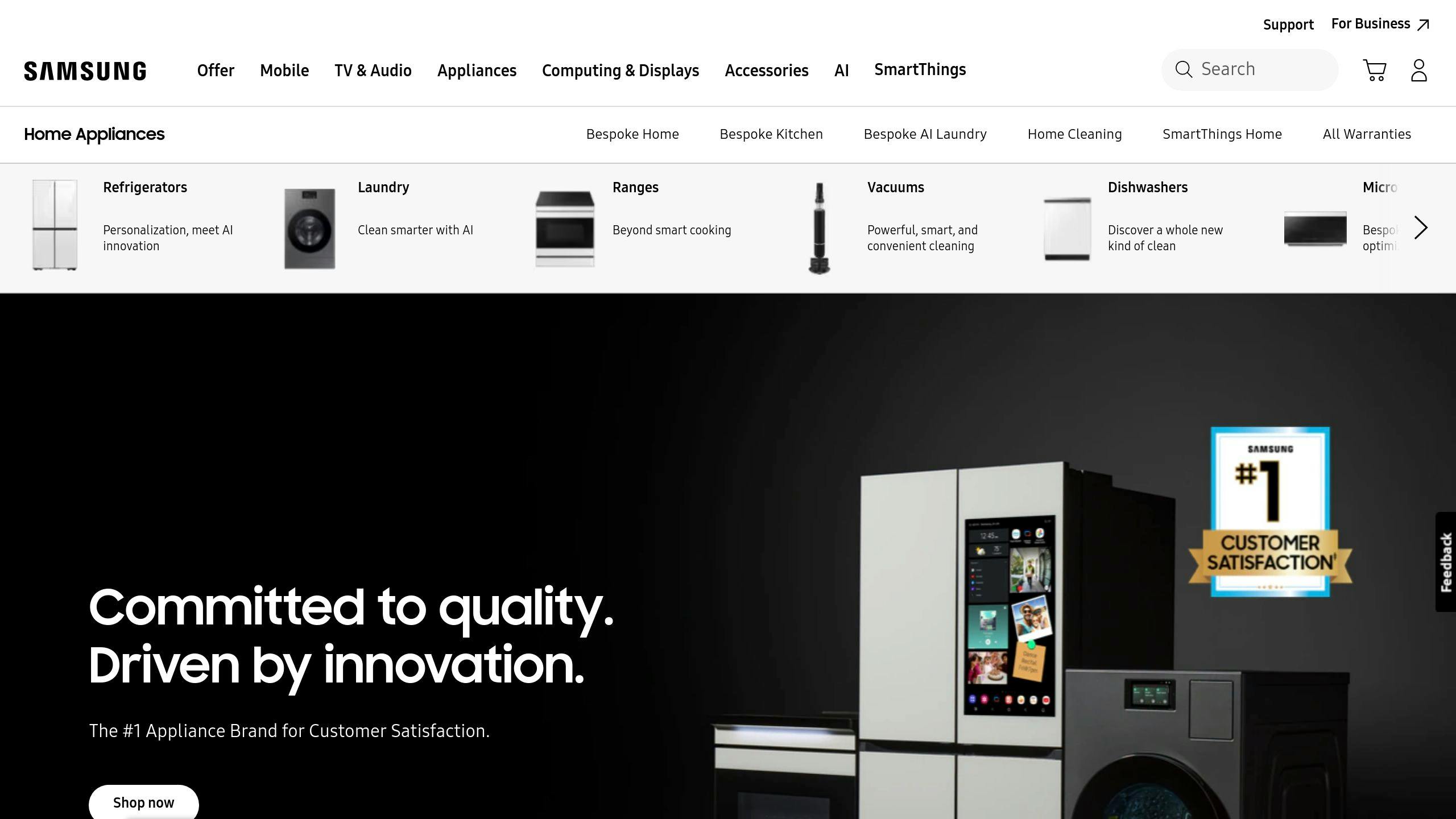
Performance and Features
When comparing LG and Samsung appliances, each brand brings unique strengths across major appliance categories.
Refrigerations and Cooling Systems
LG stands out with its Linear Cooling and DoorCooling+ systems, ensuring steady temperatures throughout the fridge. Samsung, on the other hand, offers FlexZone compartments for adaptable storage and Family Hub smart screens for seamless smart home integration [2][3].
Washing Machines and Dryers
LG’s TurboWash uses high-pressure nozzles for quicker, efficient cleaning and includes SmartThinQ for remote control. Samsung’s AddWash feature lets you add items mid-cycle, while Super Speed minimizes wash times. Both brands offer Energy Star-certified models, with LG’s TurboWash praised for balancing speed and efficiency. Samsung keeps its edge with competitive pricing and advanced features [1][3].
Dishwashers and Other Appliances
LG’s QuadWash and TrueSteam deliver thorough cleaning with minimal noise. Samsung’s WaterWall and Zone Booster focus on targeted cleaning and smart connectivity [1][3].
"LG dishwashers are known for their very quiet operation and thorough cleaning capabilities, while Samsung models offer smart features like Wi-Fi connectivity and voice control options" [1][3].
| Feature Category | LG | Samsung |
|---|---|---|
| Cooling Technology | Linear Cooling, Steady temps | FlexZone, Adaptable storage |
| Washing Technology | TurboWash, Remote control | AddWash, Super Speed |
| Dishwashing | QuadWash, Steam sanitization | WaterWall, Zone Booster |
| Smart Features | SmartThinQ integration | Family Hub, Voice control |
| Energy Efficiency | Smart Inverter optimization | Digital Inverter optimization |
Key Highlights
- LG Refrigerations: Ideal for consistent temperature control and energy efficiency.
- Samsung Refrigerations: Great for flexible storage and smart home integration.
- LG Washing Machines: Known for efficient cleaning and quiet operation.
- Samsung Washing Machines: Shine with smart features and faster cycles.
- LG Dishwashers: Prioritize quiet performance and thorough cleaning.
- Samsung Dishwashers: Offer advanced connectivity and targeted cleaning.
Performance and features are just the start – design and user experience complete the picture [1][2].
Design and User Experience
LG and Samsung approach appliance design and user experience in distinct ways, catering to different consumer preferences and needs.
Style and Customization Options
Samsung’s Bespoke line stands out with its interchangeable panels, letting users mix and match colors and finishes to complement their home décor. On the other hand, LG leans toward minimalist and space-saving designs. Samsung also offers flexible configurations for larger spaces, while LG focuses more on compact solutions [2][3].
| Design Aspect | LG | Samsung |
|---|---|---|
| Design Philosophy | Minimalist, Space-saving | Customizable, Feature-packed |
| Finish Options | Classic (Black, White, Steel) | Bespoke panels, Various colors |
| Size Adaptability | Compact-oriented | Flexible layouts |
| Visual Technology | InstaView Door-in-Door | Family Hub Display |
Both brands go beyond appearances by integrating cutting-edge smart technologies to make everyday tasks easier.
Smart Technology and Connectivity
When it comes to smart home integration, LG and Samsung take slightly different paths. Samsung’s SmartThings ecosystem offers features like recipe management, voice control, energy tracking, and automated maintenance scheduling [1][2].
"Samsung’s Virtual Flame Technology provides a realistic gas burner experience on electric cooktops, while LG’s InstaView technology allows users to see inside their oven without opening the door, demonstrating how both brands innovate differently to enhance user experience" [1][2].
Customer Feedback on Usability
Customer reviews highlight clear contrasts in usability. LG earns praise for its simple and intuitive interfaces. Its control panels are well-labeled and logically arranged, making them easy to use even for first-time users [1][2].
Samsung, while offering a wealth of features, sometimes faces criticism for its more complex interfaces, which can be challenging for some users to navigate [1][2]. Both brands have made strides in improving their apps and voice control features, responding to customer input.
While design and ease of use are crucial, the lasting performance of appliances often carries the most weight for buyers.
sbb-itb-09ea625
Durability and Reliability
Reliability Across Appliance Types
LG refrigerations generally have fewer reported issues and longer lifespans, although some models face compressor problems. Samsung, on the other hand, offers advanced features but occasionally encounters software-related reliability issues [3] [2].
| Appliance Type | LG Reliability | Samsung Reliability |
|---|---|---|
| Refrigerations | Strong performance, occasional compressor issues | Advanced features, some software concerns |
| Washing Machines | Durable, with TurboWash technology | Innovative features, performance varies |
| Dishwashers | Reliable and energy-efficient | Includes smart features, mixed reliability |
Warranty and Customer Support
LG stands out with solid warranty coverage and a network of factory-trained technicians. These technicians complete over 200 hours of product-specific training and must achieve at least an 80% score on exams [4].
Samsung also provides warranty coverage, but the quality and availability of service can depend on your location. Both brands offer standard warranties, but LG’s dedicated factory service network often ensures more consistent repair experiences [4].
Repair Costs and Maintenance Needs
LG’s emphasis on durability often leads to lower maintenance costs over time [3]. Samsung models, especially those with complex smart features, may incur higher repair costs, particularly for software-related problems [2].
Customer feedback frequently highlights LG’s reliability in refrigerations and washing machines. Meanwhile, Samsung users value the brand’s innovative features, even though software issues can arise [2] [3].
Key maintenance factors include:
| Aspect | LG | Samsung |
|---|---|---|
| Parts & Service | Extensive factory network coverage | Availability varies by region |
| Technical Support | Factory-trained specialists | Relies on mixed third-party services |
| Common Repairs | Focused on mechanical components | Includes both software and mechanical fixes |
While durability and repair costs are important, choosing between these brands often comes down to balancing these factors with performance, design, and personal preferences [4].
Conclusion
Key Takeaways
LG and Samsung each bring their own strengths to the table. LG stands out for its energy-efficient smart inverter technology and dependable build quality, while Samsung shines with its advanced smart features and flexible designs. These differences reflect their unique approaches to creating appliances.
| Brand | Strengths | Considerations |
|---|---|---|
| LG | – Durable build quality – Energy-saving features – Factory-trained service network |
Higher upfront cost |
| Samsung | – Advanced smart integrations – Versatile storage solutions – Budget-friendly pricing |
Software reliability concerns |
Choosing Based on Your Needs
Deciding between LG and Samsung comes down to what matters most to you. If you’re into smart home tech and want flexibility in design, Samsung has plenty to offer. On the other hand, if durability and energy savings are your top priorities, LG is a reliable option [1] [3].
For instance, Samsung’s smart features are perfect for tech enthusiasts who value cutting-edge integration [1]. Meanwhile, LG’s reputation for reliability and energy efficiency makes it an excellent choice for long-term use [3].
Research and Support: Key Factors to Consider
After narrowing down your preferences, dive deeper into specific models and service options to ensure a hassle-free experience. LG offers dependable service through its factory-trained technicians, while Samsung’s support varies depending on location [4].
Here are some important aspects to evaluate:
- Energy efficiency ratings: Look for models with lower energy consumption to save on utility costs.
- Local service availability: Check if repair and maintenance services are easily accessible in your area.
- Warranty coverage: Compare warranties to understand the level of protection offered for each model.
Ultimately, the best choice will depend on aligning your needs with the available support and features. Carefully review energy ratings, service options, and warranties to make a well-informed decision [2].
FAQs
Is Samsung or LG better for washers?
Samsung washers are generally more budget-friendly and come with easy-to-use features, especially in their top-load models [1]. Both brands bring unique strengths to their washing machines.
LG stands out with its TurboWash technology, which handles heavy-duty cleaning effectively, and a smart inverter system that promotes energy efficiency [1][3]. On the other hand, Samsung’s AddWash feature lets you add forgotten items mid-cycle, making it a practical option for busy households [1].
If you’re into smart home setups, Samsung integrates well with various connectivity options. Meanwhile, LG focuses on durability and energy savings, making it a dependable long-term choice [3].
In short, Samsung is great for tech-savvy users, while LG is ideal for those seeking reliability and energy-efficient performance [1][3]. Your decision will depend on whether you value cutting-edge features or long-term dependability.


