

Smart air filters combine traditional air filtration with modern technology like WiFi, sensors, and automation to improve indoor air quality. They monitor air pollutants in real time, adjust settings automatically, and can be controlled via smartphone apps or smart home systems like Alexa or Google Assistant. Key benefits include:
- Real-time air quality tracking: Measures dust, pollen, VOCs, CO2, and humidity.
- Automatic adjustments: Changes fan speed and filtration based on detected pollutants.
- Convenience: Mobile app controls, maintenance alerts, and integration with smart home devices.
- Energy efficiency: Uses features like auto-mode and smart scheduling to save power.
These systems are ideal for maintaining healthier indoor environments with minimal effort.
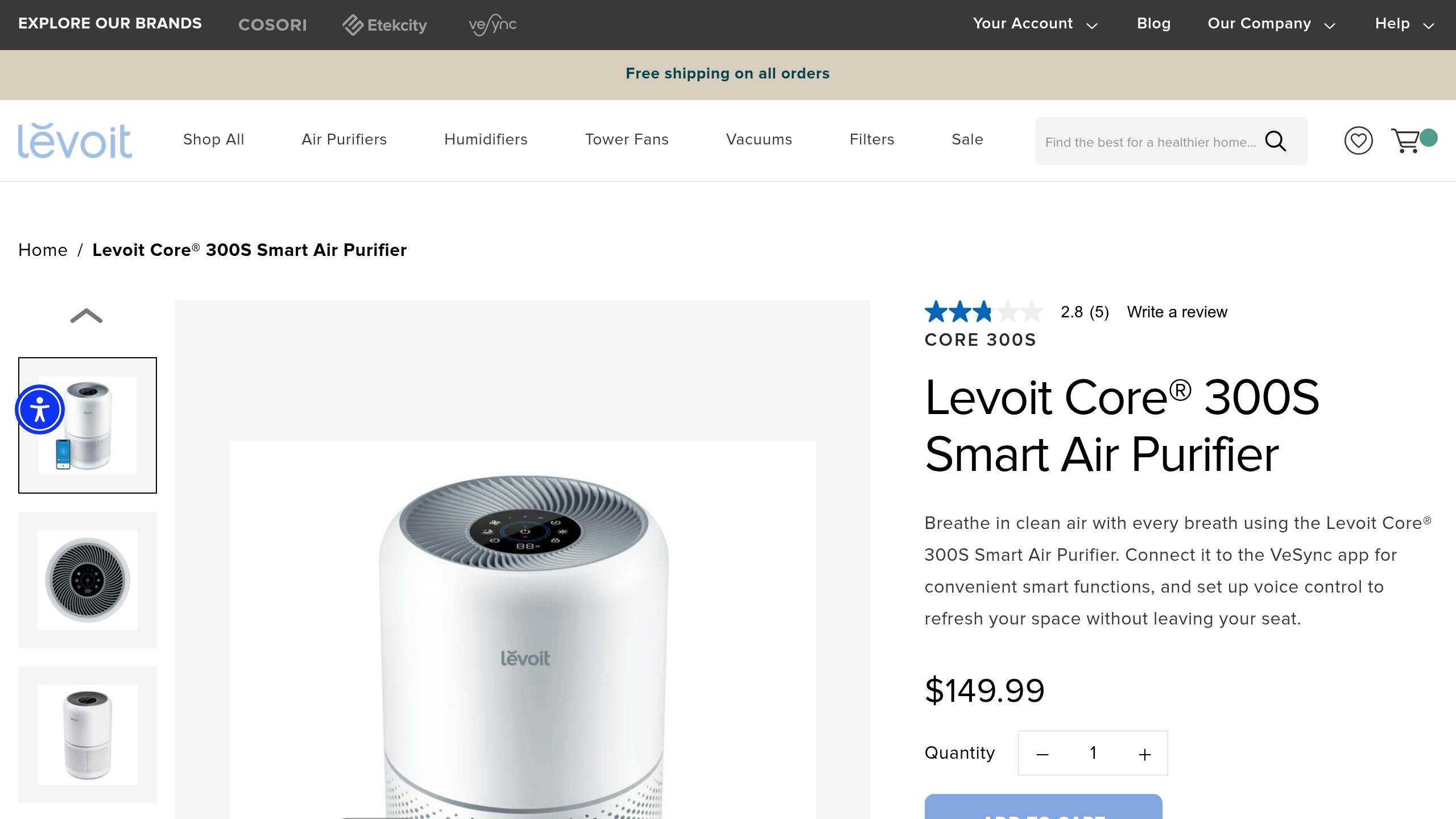
Levoit Core 300S Smart Air Purifier Review and Testing
Operating Principles
Smart air filtration systems go beyond basic filtering by combining advanced sensor technology and intelligent data processing. These systems work together to monitor and improve indoor air quality automatically.
Sensor Systems
At the core of every smart air filter is its advanced sensor array. These sensors go beyond simple particulate detection, offering a detailed analysis of air quality. Most modern devices use multiple types of sensors to monitor a variety of factors, such as:
- Particulates like dust and pollen
- Chemicals such as VOCs (volatile organic compounds) and NO2
- Air conditions like CO2 levels and humidity
For instance, the Mila air purifier showcases the power of these sensors, achieving a 92% improvement in air quality in a 320 sq. ft. room.
WiFi and Data Systems
WiFi connectivity plays a key role in how smart filters operate. These devices connect to your home WiFi, sending air quality data to secure cloud servers for analysis. This setup ensures a smooth exchange of information between the device, cloud storage, and user interfaces.
Self-Adjusting Features
One of the standout features of modern smart filters is their ability to operate autonomously. Using real-time air quality data, these devices adjust their settings to optimize performance.
For example, the system can automatically tweak fan speeds, focus on specific filtration needs, or adjust operating schedules based on pollutants detected in the air. If high VOC levels are identified, the filter will prioritize carbon filtration to address the issue [3].
These automated adjustments pave the way for the user-friendly features discussed in the next section.
Main Functions
Smart air filters come with advanced features that make managing indoor air quality easier and more effective compared to older models.
Mobile App Controls
Many smart air filters can be controlled through dedicated smartphone apps. For example, the Levoit Vital 200S lets users monitor air quality in real time, adjust fan speeds, and switch between modes – all from their phone[3].
Some key app features include:
- Real-time air quality updates
- Customizable schedules
- Mode options: Auto, sleep, or turbo
- Historical data: Track air quality trends over time
Smart Home Integration
These devices can also connect with smart home systems for added convenience. For instance, the Mila air purifier works with Amazon Alexa and Google Assistant, so you can use voice commands or include it in your smart home routines[4].
Filter Status Alerts
Smart air filters take the hassle out of maintenance by monitoring their own condition and sending timely notifications. The Filtrete Smart Air Filter system is a great example, offering updates through various channels:
| Alert Type | Channel | Purpose |
|---|---|---|
| Filter Life | Mobile app + Email | Shows how much life is left in the filter |
| Replacement Due | Push notification | Reminds you when it’s time to replace |
| Performance Issues | In-app alert | Warns of reduced efficiency |
| Maintenance Reminders | System notification | Suggests routine cleaning |
With these alerts, users can keep their filters running smoothly without the guesswork. The Filtrete Smart App even stores filter details and allows for easy reordering of replacements[1].
These automated features simplify maintaining air quality, paving the way for the benefits discussed in the next section.
sbb-itb-09ea625
Advantages
Smart air filters bring a modern approach to improving indoor air quality, offering benefits that go beyond traditional models.
Air Quality Tracking
These filters come equipped with sensors that monitor various air quality factors in real time. Here’s a breakdown of what they track:
| Pollutant Type | Measurement | Impact |
|---|---|---|
| Particulate Matter | PM1, PM2.5, PM10 | Detects dust, allergens, smoke |
| Gases | VOCs, CO2, CO | Identifies harmful chemicals |
| Environment | Temperature, Humidity | Maintains comfort levels |
This constant monitoring allows the device to adjust automatically when air quality changes, ensuring a healthier environment without manual intervention[3].
Power Usage
Smart air filters are designed to save energy without compromising performance. Studies show they can cut energy use by up to 50% compared to older models[4]. They achieve this through features like:
- Auto-mode: Adjusts fan speed based on air quality in real time.
- Smart scheduling: Runs the device only when needed, avoiding wasted energy.
- Energy Star certification: Meets strict energy-saving standards.
For example, the Levoit Core 400S smart air purifier reduced its energy usage from 35 kWh to 28 kWh per month during testing, showcasing its efficiency.
Ease of Use
Managing air quality becomes effortless with smart air filters. They integrate seamlessly with smart home systems, allowing voice commands and automatic adjustments to environmental changes. These features not only make them convenient but also reduce the need for constant maintenance – something we’ll dive into when discussing setup and care.
Setup and Care
Smart features make operation easier, but proper installation is key to getting the best performance.
Buying Guide
Look for models with accurate sensors and automation features similar to those mentioned in the Operating Principles.
| Feature | Ideal Spec | Key Benefit |
|---|---|---|
| CADR Rating | 200+ for bedrooms, 300+ for living spaces | Faster air cleaning |
| MERV Rating | 13 or higher | Filters out smaller particles |
| Coverage Area | Matches room size | Ensures effective purification |
| Noise Level | Under 50dB for bedrooms | Quiet operation for better rest |
First-Time Setup
To get the best out of your smart air filter, follow these steps during the initial setup:
- Placement: Keep the unit at least 2 feet away from walls and furniture for proper airflow.
- Connectivity: Use the manufacturer’s app to connect to WiFi and integrate with your smart home system.
- Air Quality Test: Run an initial test to set a baseline for your space’s air quality [3].
Upkeep Requirements
Regular care keeps your air filter running efficiently and extends its lifespan. Here’s what to focus on:
| Task | Frequency | Why It Matters |
|---|---|---|
| Filter Replacement | Every 3-6 months | Keeps filtration working well |
| Sensor Cleaning | Monthly | Ensures accurate performance |
| Exterior Wiping | Weekly | Reduces dust buildup |
| App Updates | As released | Adds new features and security |
For professional help, Longhorn Services offers maintenance options like sensor calibration and system tuning. Keeping up with maintenance not only improves air quality but also helps maintain energy efficiency.
Summary
Main Points
Throughout this guide, we’ve explored how smart air filters, equipped with multi-stage filtration and IoT features, are changing the way we manage indoor air quality. Devices like the Mila purifier can eliminate up to 99.97% of airborne particles as small as 0.3 microns [5]. Studies confirm that smart filtration technology leads to noticeable improvements in residential air quality.
Key benefits of these systems include:
- Real-time air quality monitoring
- Automatic adjustments for peak performance
- Integration with voice assistants for smart home control
- Notifications for maintenance needs
Service Options
To get the most out of your smart air filtration system, professional services can make a big difference. Longhorn Services offers installation, maintenance, and system integration for DFW residents. Their expertise in air duct cleaning and HVAC systems ensures smooth operation. Their offerings include:
- Installation of HVAC-integrated smart filters
- Air duct cleaning to boost filtration efficiency
- Consultation to help you choose the right system
FAQs
How does a smart air filter work?
Smart air filters blend traditional filtration methods with modern technology to help monitor and improve the air quality in your home. These devices use WiFi-connected sensors to track air quality and airflow in real time [3]. If there’s a change in air quality or the filter needs attention, you’ll get alerts through a smartphone app.
Here’s how they work:
- Sensors: Measure particulate levels and airflow efficiency.
- WiFi Connectivity: Shares real-time data with your app.
- App Interface: Lets you control the system and receive alerts.
The system adjusts its filtration settings automatically based on the environment.
When choosing a smart air filter, keep these points in mind:
- Reliable WiFi for uninterrupted connectivity.
- High filter efficiency (look for MERV 13 or higher).
- Regular app updates to access new features.
Make sure to follow app notifications for filter replacements [3][1] and keep both the app and firmware up-to-date [2]. This keeps your smart air filter working effectively.
For setup instructions and maintenance tips, check out the Setup and Care section above.


